
Digital marketing has become one of the most practical career skills for students, graduates, working professionals, freelancers, and business owners. As companies continue to invest in websites, social media, search engines, online advertising, and content, the demand for trained digital marketing professionals is growing.
One of the first questions beginners ask before joining a course is: What are the digital marketing course fees in 2026?
The answer depends on several factors, including the institute, course duration, learning format, syllabus, practical training, certification, and additional career support. Some basic courses are available at affordable prices, while advanced programs with extensive practical training can cost significantly more.
This guide explains digital marketing course fees, what influences the cost, what students can expect to learn, and how to choose a course that provides genuine value.
What Is a Digital Marketing Course?
A digital marketing course teaches students how businesses promote their products and services through online channels. Instead of depending only on traditional advertising, businesses use digital platforms to reach specific audiences and measure campaign performance.
A good course generally covers areas such as:
- Search Engine Optimization (SEO)
- Social media marketing
- Search engine marketing
- Content marketing
- Email marketing
- Google Ads and paid advertising
- Website and WordPress basics
- Analytics and reporting
- Affiliate marketing
- Online reputation and branding
The exact syllabus varies between institutes, so students should compare the curriculum before looking only at digital marketing course fees.
Digital Marketing Course Fees in 2026
There is no single fixed price for digital marketing education. Course fees can vary considerably depending on the level and type of training.
For beginners in India, a basic digital marketing course may start from around ₹10,000 to ₹20,000. Intermediate programs with practical assignments and multiple modules may range from ₹20,000 to ₹50,000.
Advanced professional programs can cost ₹50,000 to ₹1,00,000 or more, especially when they include extensive projects, live campaigns, mentorship, certifications, placement assistance, or specialized training.
These figures are general market ranges rather than fixed prices. Every institute can have a different fee structure.
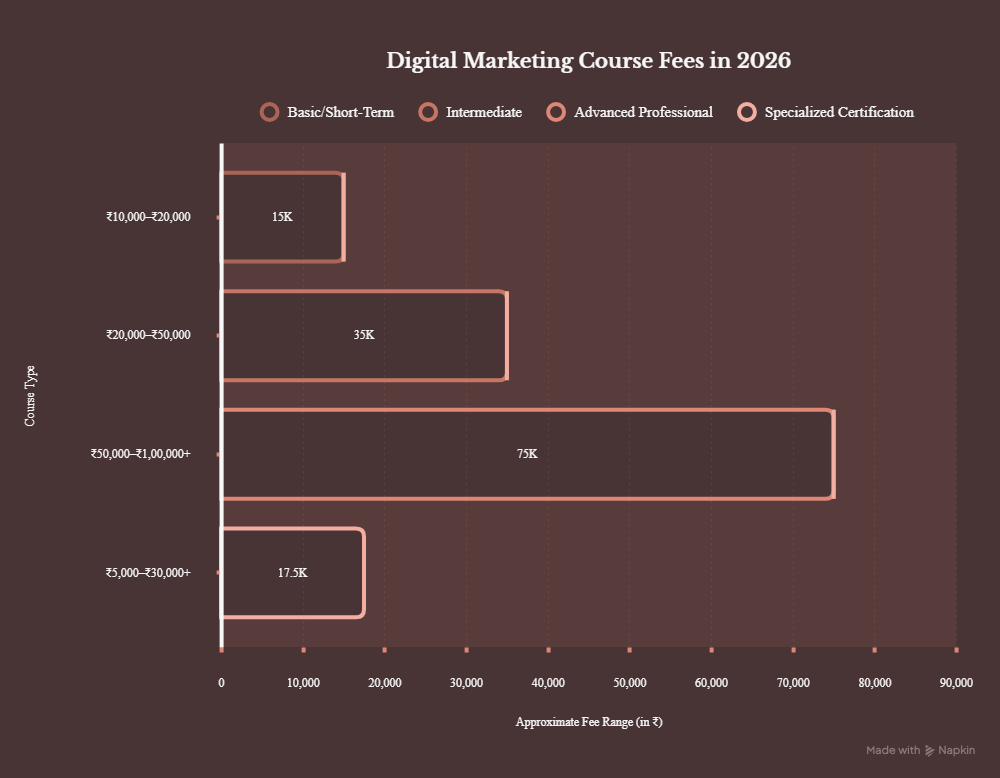
Typical Course Fee Range
| Course Type | Approximate Fee Range |
| Basic/Short-Term Course | ₹10,000–₹20,000 |
| Intermediate Course | ₹20,000–₹50,000 |
| Advanced Professional Course | ₹50,000–₹1,00,000+ |
| Specialized Certification | ₹5,000–₹30,000+ |
When comparing digital marketing course fees, remember that the cheapest course is not always the best option. The quality of training and practical exposure can be more important than the initial price.
What Factors Affect Digital Marketing Course Fees?
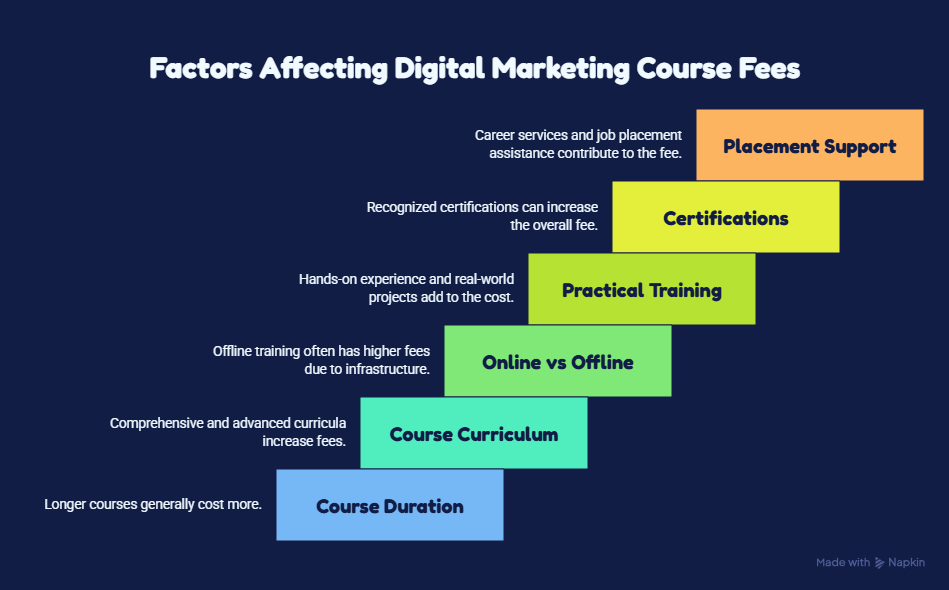
Several factors influence the cost of a digital marketing course. Understanding them can help beginners decide whether a course is reasonably priced.
1. Course Duration
Short-term courses generally cost less because they cover fewer topics and require less training time. Comprehensive programs may run for several months and include advanced concepts, assignments, and projects.
A longer duration can be useful when the additional time is being used for practical learning rather than simply extending classroom sessions.
2. Course Curriculum
The syllabus is one of the most important factors to consider. A course covering only basic SEO and social media may cost less than a program that includes SEO, Google Ads, analytics, content marketing, email marketing, WordPress, affiliate marketing, and conversion optimization.
Before paying the digital marketing course fees, check whether the curriculum matches your career goals.
3. Online vs Offline Training
Online courses can often be more affordable because students do not need to attend a physical classroom. Offline courses, on the other hand, may offer direct interaction with trainers and classmates.
Neither format is automatically better. The right choice depends on your learning style, schedule, and the quality of instruction.
4. Practical Training
Digital marketing is a practical field. Reading about SEO or advertising is different from actually creating campaigns, optimizing pages, analyzing data, or managing social media content.
Courses that provide live projects, assignments, campaign practice, and real-world case studies may charge higher fees because they require more trainer involvement and resources.
5. Certifications
Some programs include industry-recognized certifications or prepare students for external certification exams. Certifications can strengthen a beginner’s resume, although practical skills and a good portfolio remain important.
6. Placement and Career Support
Some institutes provide resume development, interview preparation, internship opportunities, job assistance, and career counseling. These services can affect digital marketing course fees.
However, students should carefully understand what “placement assistance” actually means before enrolling. It is better to ask about the specific support included rather than assuming that a course guarantees a job.
Skills You Can Gain From Digital Marketing Training
A digital marketing course introduces learners to the main methods businesses use to attract people and grow their online presence.
Social Media Marketing
You learn how brands can use social platforms like Instagram, Facebook, LinkedIn, and YouTube to reach the right audience. The training may cover content planning, audience engagement, campaign creation, and basic performance tracking.
Paid Advertising
Students are introduced to online advertising methods, including Google Ads. They learn how to plan campaigns, select relevant keywords or audiences, create advertisements, manage budgets, and evaluate campaign results.
Content Marketing
Content marketing teaches you how to develop useful information that matches what an audience is looking for. This can include blog articles, social media posts, videos, graphics, and other forms of digital content.
Digital Analytics
Analytics helps marketers measure the effectiveness of their online activities. Students learn how to examine website visits, user behaviour, traffic sources, conversions, and campaign performance so they can make better marketing decisions.
Email Marketing
Email marketing teaches businesses how to communicate with customers through newsletters, promotional campaigns, automated messages, and targeted communication.
Is a Digital Marketing Course Worth the Fees?
For many beginners, digital marketing can be a valuable skill because it is useful across different industries. Almost every business with an online presence needs some form of digital marketing.
However, the value of a course depends on what you actually learn.
A course may be worth the digital marketing course fees if it provides:
- A structured and updated syllabus
- Experienced trainers
- Practical assignments
- Live projects
- Portfolio-building opportunities
- Industry tools and platforms
- Performance analysis practice
- Interview or career guidance
- Internship opportunities where applicable
Simply completing a certificate does not automatically make someone a successful digital marketer. Consistent practice and real-world experience are essential.
Digital Marketing Course Fees: Choose the Right Course
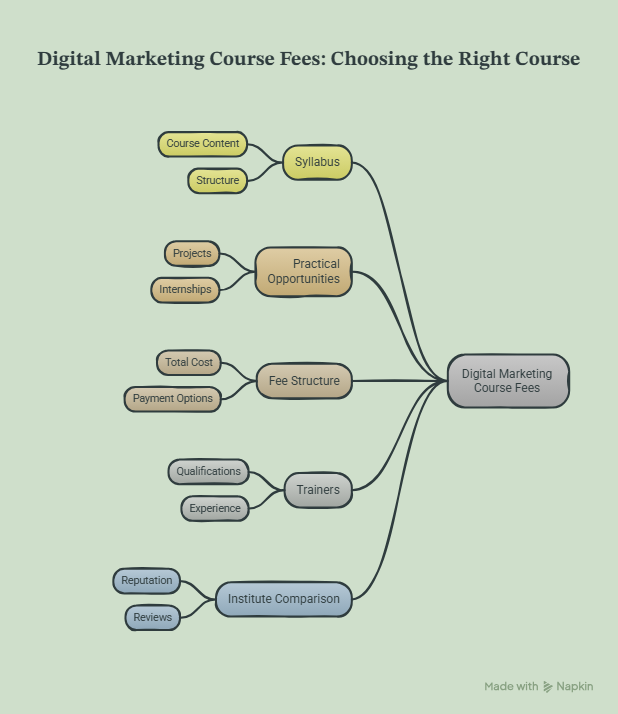
Instead of choosing a course based only on digital marketing course fees, beginners should evaluate the complete learning experience.
Check the Syllabus
Make sure the course covers the skills you want to develop. If your goal is SEO, for example, the program should provide enough depth in keyword research, on-page SEO, technical SEO, content optimization, analytics, and related areas.
Review Practical Opportunities
Ask whether you will work on real websites, advertising campaigns, social media accounts, content projects, or case studies.
Understand the Fee Structure
Check whether the advertised price includes registration, study materials, certifications, taxes, examination fees, or any additional charges.
Ask About Trainers
The trainer’s practical experience can significantly influence the learning experience. Look for trainers who can explain concepts through real examples rather than only theoretical presentations.
Compare Multiple Institutes
Before making a decision, compare at least a few institutes based on curriculum, duration, practical training, support, reviews, and digital marketing course fees.
Online vs Offline Digital Marketing Courses
Both online and offline learning have advantages.
Online courses offer flexibility and can be convenient for students or working professionals. You can often learn from home and revisit recorded lessons when available.
Offline courses provide face-to-face interaction and may be suitable for learners who prefer a classroom environment.
The important point is not simply whether the course is online or offline. Focus on whether the training provides proper guidance, practical learning, assignments, and opportunities to ask questions.
Career Opportunities After a Digital Marketing Course
After gaining practical knowledge, beginners can explore several career paths.
Some common roles include:
- Digital Marketing Executive
- SEO Executive
- Social Media Executive
- Content Marketing Executive
- PPC Executive
- Email Marketing Executive
- SEO Analyst
- Performance Marketing Executive
- Content Strategist
- Freelance Digital Marketer
Salary and career growth depend on skills, experience, location, company, specialization, and performance. Building a strong portfolio can also help candidates demonstrate their abilities to employers and clients.
Tips to Get Better Value From Your Course
Paying the digital marketing course fees is only the beginning. To get better results from your investment, focus on applying what you learn.
Create your own practice website or blog. Experiment with SEO techniques, write content, study analytics, create social media campaigns, and learn how advertising platforms work.
You can also build a portfolio by documenting your projects and results. Even small personal projects can demonstrate practical knowledge when you are applying for internships or entry-level positions.
Most importantly, keep learning. Digital marketing changes frequently, so professionals need to stay updated with platform changes, search trends, advertising technologies, analytics tools, and content strategies.
Final Thoughts
The right digital marketing course fees should be evaluated against the quality of education, practical experience, curriculum, mentorship, and career support you receive. Beginners should avoid choosing a course only because it is cheap and instead focus on long-term learning value.
Institutes such as Dizital Mantras can be considered by learners who want structured digital marketing training and practical exposure. Before enrolling, compare the course syllabus, training format, practical projects, support, and current fee details to make an informed decision.
A good course can give you the foundation, but your practice, portfolio, and continuous learning will ultimately shape your digital marketing career.