Introduction
Digital marketing has become an important part of modern business. Companies of all sizes use search engines, social media, websites, email, online advertising, and content to reach customers and build their brands.
As businesses continue investing in online channels, opportunities are growing across SEO, social media marketing, performance marketing, content marketing, analytics, and marketing automation.
For students, fresh graduates, and working professionals, digital marketing jobs can offer different career paths depending on their skills and interests. Salary is also an important factor when choosing a career, but earnings vary based on experience, location, specialization, company, and responsibilities.
This guide explains digital marketing salary ranges in India, popular roles, required skills, opportunities for freshers, and long-term career growth.
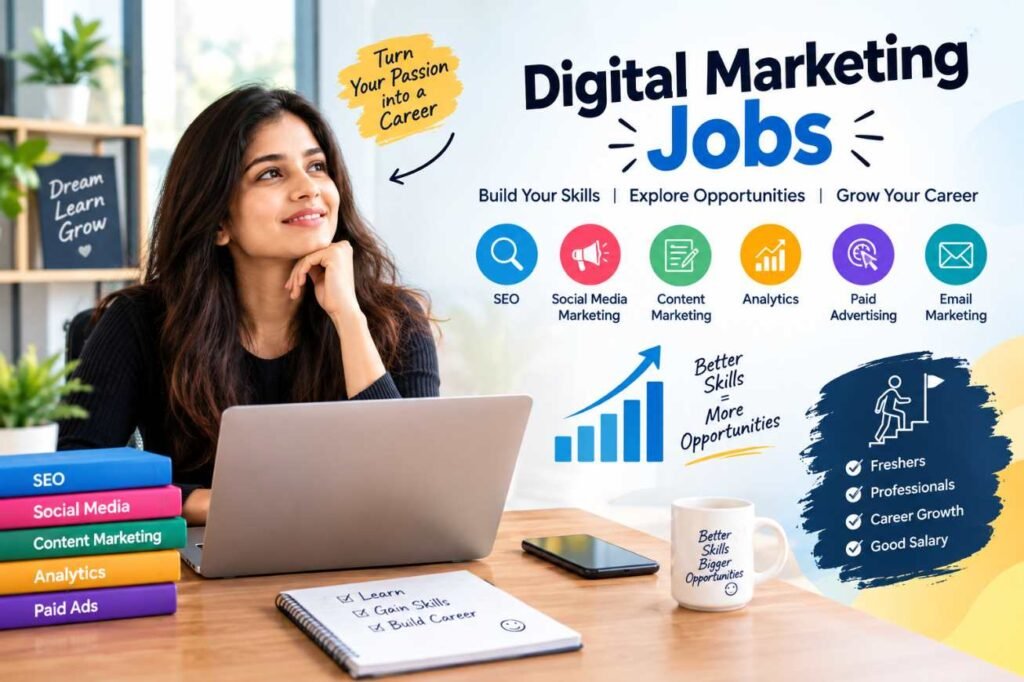
What Does a Digital Marketer Do?
A digital marketer helps businesses promote their products, services, or brands through online channels. The exact responsibilities depend on the job role and company.
Common responsibilities include:
- Planning online marketing campaigns
- Conducting keyword research
- Improving website visibility
- Managing social media platforms
- Creating digital content
- Running paid advertising campaigns
- Monitoring website traffic
- Analyzing campaign performance
- Preparing marketing reports
- Improving leads and conversions
Because the industry includes several specializations, beginners can choose from different digital marketing jobs according to their interests and strengths.
Digital Marketing Salary in India in 2026
There is no fixed salary for every digital marketing professional. Compensation can depend on experience, skills, location, company size, industry, specialization, and responsibilities.
A fresher joining an entry-level position will generally earn differently from an experienced specialist or manager.
The following are indicative annual salary ranges for understanding the market. Actual salaries may vary between companies and locations.
| Job Role | Experience | Approx. Annual Salary |
|---|---|---|
| Digital Marketing Intern | 0–1 year | ₹1.2–₹3 LPA |
| Digital Marketing Executive | 0–2 years | ₹2–₹4.5 LPA |
| SEO Executive | 0–2 years | ₹2–₹4.5 LPA |
| Social Media Executive | 0–2 years | ₹2–₹4.5 LPA |
| PPC Executive | 1–3 years | ₹3–₹6 LPA |
| SEO Specialist | 2–5 years | ₹4–₹8 LPA |
| Digital Marketing Specialist | 2–5 years | ₹4–₹9 LPA |
| Performance Marketing Specialist | 2–5 years | ₹4–₹10 LPA |
| Digital Marketing Manager | 4–8 years | ₹6–₹15+ LPA |
These figures are general estimates and should not be considered guaranteed salary offers.
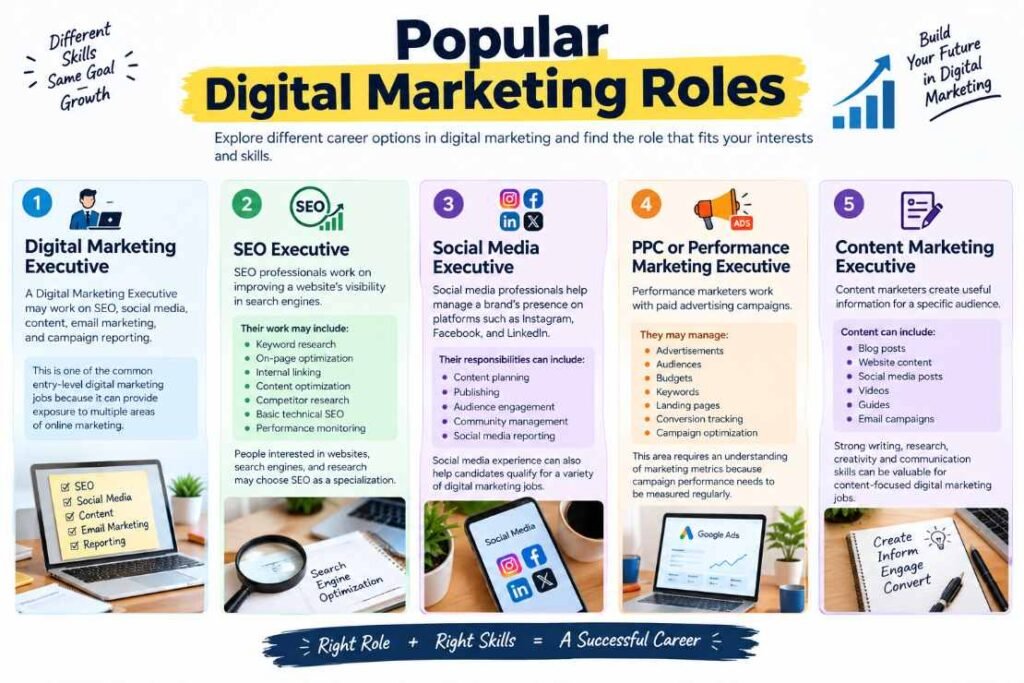
Popular Digital Marketing Roles
There are several career options available in the industry. Understanding different roles can help beginners choose an area that matches their interests.
1. Digital Marketing Executive
A Digital Marketing Executive may work on SEO, social media, content, email marketing, and campaign reporting.
This is one of the common entry-level digital marketing jobs because it can provide exposure to multiple areas of online marketing.
2. SEO Executive
SEO professionals work on improving a website’s visibility in search engines.
Their work may include:
- Keyword research
- On-page optimization
- Internal linking
- Content optimization
- Competitor research
- Basic technical SEO
- Performance monitoring
People interested in websites, search engines, and research may choose SEO as a specialization.
3. Social Media Executive
Social media professionals help manage a brand’s presence on platforms such as Instagram, Facebook, and LinkedIn.
Their responsibilities can include content planning, publishing, audience engagement, community management, and social media reporting.
Social media experience can also help candidates qualify for a variety of digital marketing jobs.
4. PPC or Performance Marketing Executive
Performance marketers work with paid advertising campaigns.
They may manage advertisements, audiences, budgets, keywords, landing pages, conversion tracking, and campaign optimization.
This area requires an understanding of marketing metrics because campaign performance needs to be measured regularly.
5. Content Marketing Executive
Content marketers create useful information for a specific audience.
Content can include:
- Blog posts
- Website content
- Social media posts
- Videos
- Guides
- Email campaigns
Strong writing, research, creativity, and communication skills can be valuable for content-focused digital marketing jobs.
Skills Required for Digital Marketing Jobs
Employers can look for a combination of technical knowledge and practical abilities when hiring professionals.
Technical Skills
Important skills can include:
- Search Engine Optimization
- Google Ads
- Social media marketing
- Content marketing
- Email marketing
- Web analytics
- Keyword research
- Conversion optimization
- Basic data analysis
- Marketing automation
- AI-assisted marketing
Beginners do not need to master every skill before applying for their first position. Building strong fundamentals and developing one or two areas of specialization can be a practical approach.
Soft Skills
Technical knowledge is only one part of a successful marketing career.
Communication, creativity, analytical thinking, problem-solving, teamwork, and time management can also be important.
A marketer may need to explain campaign results to a client, work with a designer, analyze an unsuccessful campaign, or present ideas to a team.
These skills can help professionals perform better in different digital marketing jobs as their responsibilities increase.
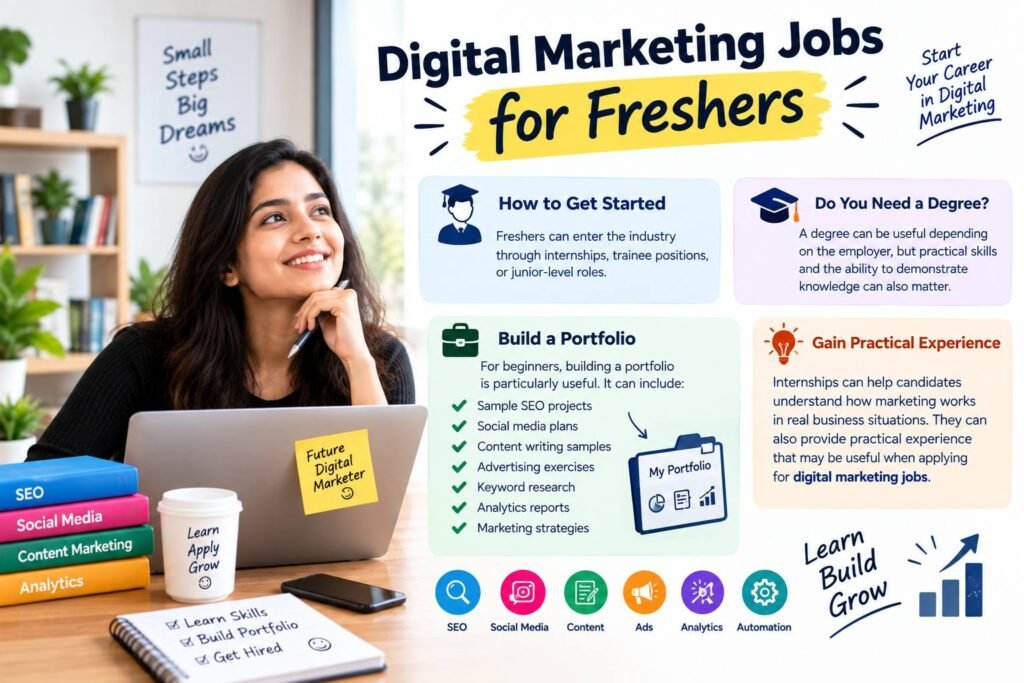
Digital Marketing Jobs for Freshers
Freshers can enter the industry through internships, trainee positions, or junior-level roles.
A degree can be useful depending on the employer, but practical skills and the ability to demonstrate knowledge can also matter.
For beginners, building a portfolio is particularly useful. It can include:
- Sample SEO projects
- Social media plans
- Content writing samples
- Advertising exercises
- Keyword research
- Analytics reports
- Marketing strategies
Internships can help candidates understand how marketing works in real business situations. They can also provide practical experience that may be useful when applying for digital marketing jobs.
How Experience Affects Salary
Experience is an important factor in career progression.
0–2 Years
At the beginning of a career, professionals generally focus on learning fundamentals and gaining practical experience.
Entry-level digital marketing jobs can help beginners understand campaign execution, reporting, client requirements, and marketing tools.
2–5 Years
After gaining experience, professionals may move into specialist positions such as SEO Specialist, Performance Marketing Specialist, Social Media Strategist, or Digital Marketing Specialist.
At this stage, employers may expect professionals to work more independently and understand campaign results.
5+ Years
Experienced professionals may progress toward senior specialist, team lead, manager, or strategy-focused positions.
Responsibilities can include managing teams, budgets, clients, campaigns, reporting, and overall marketing strategy.
How to Start a Digital Marketing Career
If you are starting from zero, following a structured approach can make learning easier.
Step 1: Learn the Fundamentals
Understand the basics of SEO, social media, paid advertising, content marketing, email marketing, and analytics.
Step 2: Choose a Specialization
Once you understand the fundamentals, select an area that matches your interests and career goals.
Step 3: Practice With Projects
Work on practical projects such as:
- Creating an SEO content plan
- Conducting keyword research
- Building a social media calendar
- Creating a sample advertising campaign
- Preparing a marketing performance report
Step 4: Build a Portfolio
Add your projects, strategies, screenshots, reports, and results to a simple portfolio.
A portfolio gives potential employers something practical to evaluate and can strengthen applications for digital marketing jobs.
Step 5: Apply for Internships and Entry-Level Roles
Internships and junior positions can help you gain experience and understand real-world marketing requirements.
Step 6: Keep Learning
Digital marketing changes regularly. Search algorithms, advertising platforms, social media features, analytics systems, and AI tools continue to evolve.
Regular learning can help professionals keep their skills relevant and prepare for new digital marketing jobs.
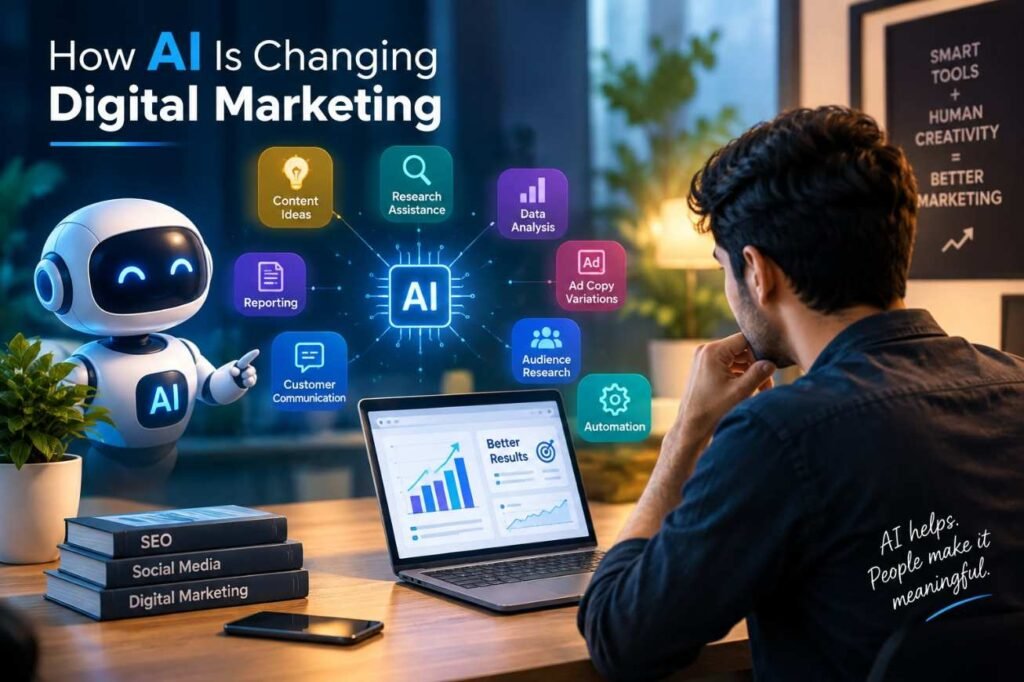
How AI Is Changing Digital Marketing
Artificial intelligence is becoming part of many marketing workflows.
Marketers can use AI tools for:
- Content ideas
- Research assistance
- Data analysis
- Ad copy variations
- Audience research
- Reporting
- Automation
- Customer communication
AI can make certain marketing tasks faster, but human decision-making remains important. Strategy, creativity, critical thinking, communication, and customer understanding continue to play a major role.
Professionals who learn how to combine marketing knowledge with AI tools may be better prepared for changing workplace requirements and emerging digital marketing jobs.
Career Growth in Digital Marketing
A career in digital marketing can develop in different directions.
A possible progression is:
Intern → Executive → Specialist → Senior Specialist → Team Lead → Manager → Marketing Strategist
This is not a fixed career path. Some professionals become specialists, while others move toward management, consulting, freelancing, or entrepreneurship.
Career growth can depend on practical experience, specialization, communication, leadership, and the ability to understand business results.
As professionals develop these abilities, they can take on more specialized or senior digital marketing jobs.
Are Digital Marketing Jobs Suitable for Freshers?
Digital marketing can be an accessible field for beginners because there are multiple areas to explore.
Someone who enjoys writing may prefer content marketing. A person interested in search engines may choose SEO, while someone who enjoys numbers and advertising may prefer performance marketing.
The important thing is to develop practical skills instead of relying only on certificates.
Projects, internships, portfolios, and hands-on practice can help candidates demonstrate their abilities when applying for entry-level digital marketing jobs.
FAQs
What is the starting salary for digital marketing freshers in India?
Entry-level salaries vary according to the company, location, role, and candidate’s skills. A fresher may commonly start around ₹2–₹4.5 LPA, although actual offers can be lower or higher.
Can I get digital marketing jobs without a degree?
Some employers focus heavily on practical skills, portfolios, certifications, and experience, while others may have specific educational requirements. It depends on the organization and position.
Which digital marketing role pays more?
Senior management and specialized positions can offer higher compensation, but salary depends on experience, skills, company, location, and responsibilities.
How long does it take to learn digital marketing?
The fundamentals can be learned within a few months with consistent study and practice. Becoming job-ready generally requires hands-on projects and practical experience.
Is digital marketing a good career for beginners?
It offers multiple specializations and entry-level opportunities. Beginners should focus on developing practical skills, building a portfolio, and gaining experience before applying for relevant digital marketing jobs.
Conclusion
Digital marketing offers several career paths in India in 2026, including SEO, social media marketing, performance marketing, content marketing, analytics, and marketing automation.
For freshers, the most useful approach is to focus on skills and practical experience rather than salary alone. Building projects, creating a portfolio, completing internships, and continuously learning can help candidates prepare for digital marketing jobs and future opportunities.
Learning resources and practical education platforms such as Dizital Mantras can also be considered as one part of the overall learning journey. Long-term career development depends on continuous learning, practical experience, and the ability to adapt as the industry changes.