Introduction
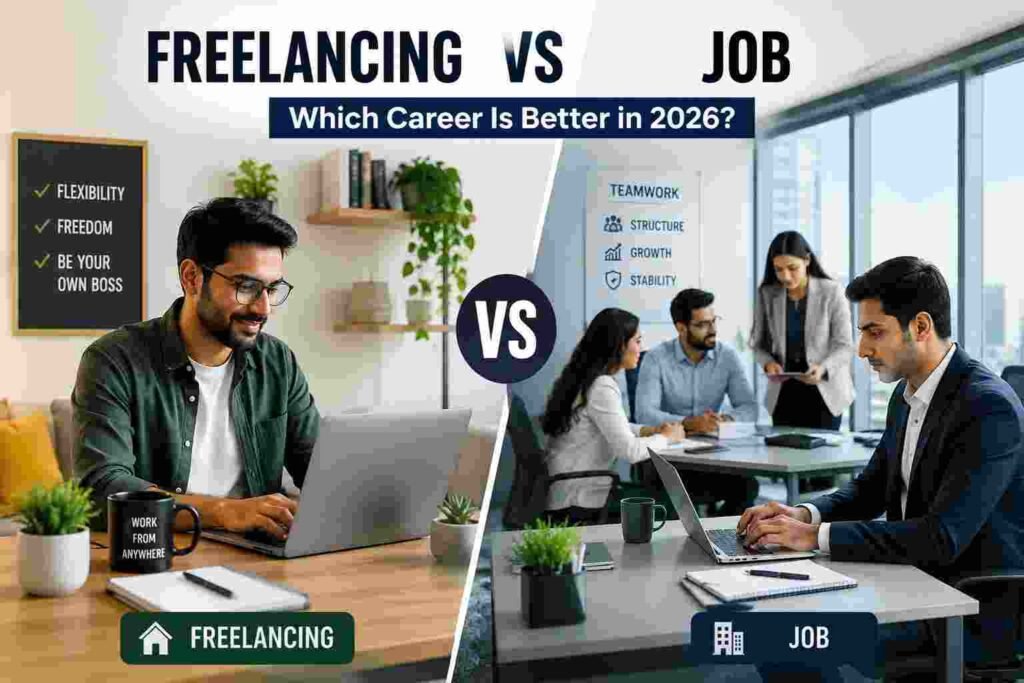
Choosing between Freelancing vs Job opportunities is one of the most important career decisions for beginners in 2026. The professional world is changing rapidly due to advancements in technology, artificial intelligence, remote work culture, and digital business models. Today, individuals have more career options than ever before. While traditional employment continues to provide stability and structured growth, freelancing has emerged as a powerful alternative that offers flexibility, independence, and global opportunities.
As businesses increasingly embrace remote work and digital collaboration, the debate surrounding Freelancing vs Job in 2026 has become more relevant. Students, fresh graduates, working professionals, and career changers are all exploring whether freelancing or a traditional job is the better path.
At Digital Mamtra, we regularly guide Freelancing vs Job aspiring professionals on digital careers, freelancing opportunities, and skill development strategies. Understanding the advantages and disadvantages of both options can help you make an informed decision that aligns with your goals, personality, and lifestyle.
In this comprehensive guide, we will compare freelancing and traditional jobs in detail, covering income, job security, work-life balance, career growth, skill development, and future opportunities.
What Is Freelancing vs Job?
Freelancing vs Job is a work arrangement where individuals provide services to multiple clients on a project, contract, or temporary basis rather than working exclusively for a single employer.
Freelancers are essentially self-employed professionals who manage their own business, clients, pricing, and schedules.
Popular freelancing fields include:
- Content Writing
- Graphic Design
- Web Development
- App Development
- Video Editing
- Digital Marketing
- SEO Services
- Social Media Management
- Virtual Assistance
- Data Analysis
Freelancers often find work through platforms such as:
- Upwork
- Fiverr
- Freelancer.com
- PeoplePerHour
- Toptal
The primary attraction of freelancing is flexibility. Freelancers can choose whom they work with, which projects they accept, and when they work.
As digital industries continue to expand, freelancing is becoming one of the fastest-growing career options worldwide.
What Is a Traditional Job?
A traditional job involves working as an employee for a company or organization. Employees perform assigned tasks and receive compensation in the form of a salary or wages.
In addition to a regular income, employees often receive several benefits such as:
- Paid holidays
- Health insurance
- Retirement benefits
- Professional training
- Career development programs
- Performance bonuses
- Job security
Traditional jobs offer a structured work environment where responsibilities, expectations, and career progression are clearly defined.
For many individuals, especially beginners, this structure provides valuable guidance and stability.
Why the Freelancing vs Job Debate Matters in 2026
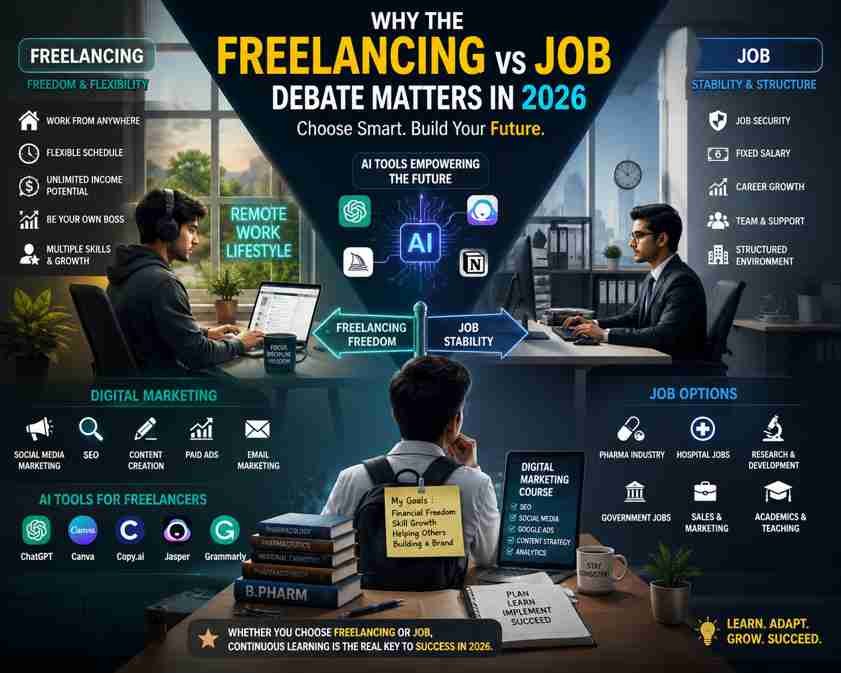
The workplace has changed significantly over the last few years.
Several factors are driving the popularity of freelancing:
- Growth of remote work
- Global demand for digital skills
- AI-powered productivity tools
- Access to international clients
- Online learning platforms
At the same time, many companies are investing heavily in employee development, making traditional employment more attractive than ever.
This creates a genuine dilemma: Should you choose freelancing or a traditional job?
The answer depends on your goals, financial needs, risk tolerance, and long-term career plans.
Freelancing vs Job: Income Comparison
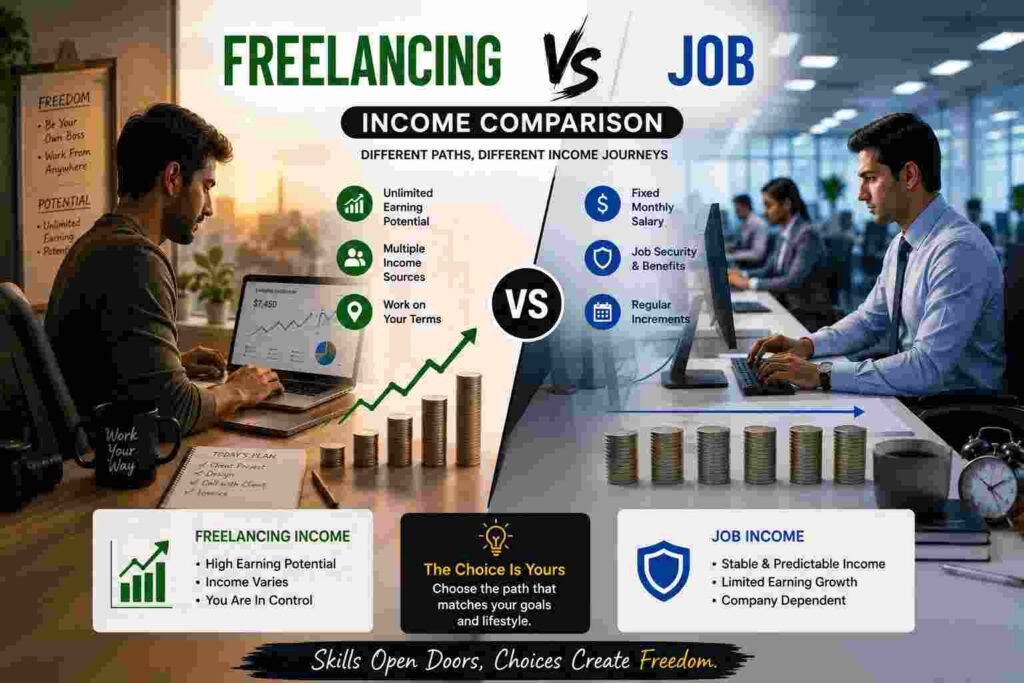
Income is often the first factor people consider when comparing Freelancing vs Job opportunities.
Freelancing Income
Freelancing offers unlimited earning potential.
A freelancer can increase income by:
- Working with multiple clients
- Charging higher rates
- Expanding service offerings
- Building a personal brand
- Creating an agency
Advantages of Freelancing Income
- No fixed earning limit
- Opportunity to work globally
- Ability to scale income quickly
- Freedom to set your own rates
Disadvantages of Freelancing Income
- Income fluctuations
- Client acquisition challenges
- Delayed payments
- Lack of guaranteed monthly earnings
Many successful freelancers eventually earn significantly more than traditional employees.
Job Income
Traditional jobs provide predictable earnings.
Advantages of Job Income
- Fixed monthly salary
- Easier budgeting and planning
- Consistent cash flow
- Additional employee benefits
Disadvantages of Job Income
- Limited salary growth
- Dependence on company policies
- Less control over compensation
For beginners, a job often offers greater financial security, while freelancing provides higher long-term earning potential.
Work-Life Balance: Freelancing vs Job
Work-life balance is another critical consideration.
Freelancing
Many people assume freelancing means complete freedom.
While flexibility is a major benefit, freelancing also requires discipline.
Benefits
- Flexible schedule
- Work from home opportunities
- Ability to choose projects
- Greater personal freedom
Challenges
- Managing multiple clients
- Tight deadlines
- Difficulty disconnecting from work
- Irregular work hours
Traditional Job
Jobs generally provide more predictable schedules.
Benefits
- Fixed working hours
- Clear responsibilities
- Organized workflow
- Better separation between work and personal life
Challenges
- Less flexibility
- Office commuting
- Limited schedule control
Ultimately, success in either path depends on time management and personal discipline.
Skill Development Opportunities
Both freelancing and traditional employment help professionals develop valuable skills.
Skills Developed Through Freelancing
Freelancers learn:
- Client communication
- Negotiation
- Personal branding
- Marketing
- Sales
- Business management
- Project management
- Time management
Freelancers often become multi-skilled professionals because they manage every aspect of their business.
Skills Developed Through Jobs
Employees gain experience in:
- Team collaboration
- Corporate communication
- Leadership
- Organizational processes
- Technical specialization
- Strategic planning
Traditional employment often allows deeper specialization within a specific field.
Job Security Comparison
Job security remains one of the biggest differences in the Freelancing vs Job discussion.
Freelancing Security
Freelancers rely on clients for income.
Potential risks include:
- Client loss
- Market competition
- Project cancellations
- Economic downturns
However, freelancers who maintain multiple clients can reduce dependency on any single source of income.
Traditional Job Security
Employees generally enjoy:
- Stable salaries
- Long-term contracts
- Employment benefits
- Legal protections
Although layoffs can happen, traditional jobs usually offer greater stability than freelancing.
Career Growth Potential
Career growth looks very different in freelancing and traditional employment.
Future Opportunities in 2026
As technology continues to evolve, new career opportunities are emerging every year. When evaluating Freelancing vs Job, developing digital skills can significantly improve your career prospects regardless of the path you choose.
A Digital Marketing Career is becoming one of the most popular options because businesses increasingly rely on online marketing to reach customers. Similarly, the demand for Work From Home Jobs continues to grow as companies adopt remote and hybrid work models.
Professionals who learn SEO, content creation, social media marketing, video editing, and AI-related skills will have a competitive advantage in the job market. Investing in continuous learning today can help secure better opportunities, higher earnings, and long-term career success. These skills will remain valuable in the evolving Freelancing vs Job landscape of 2026 and beyond.
Freelancing Growth
Freelancers can:
- Increase pricing
- Build authority
- Create agencies
- Hire teams
- Launch digital products
- Work internationally
Growth depends largely on performance and reputation.
Job Growth
Employees can:
- Receive promotions
- Move into leadership positions
- Access company-sponsored training
- Develop industry expertise
Jobs provide a clear career ladder, while freelancing offers entrepreneurial freedom.
Freelancing Trends in 2026
The freelancing industry is growing faster than ever before.
Companies are increasingly hiring freelancers because it provides:
- Cost efficiency
- Access to global talent
- Project flexibility
- Specialized expertise
Some of the highest-demand freelance skills in 2026 include:
- Artificial Intelligence Services
- Digital Marketing
- SEO Optimization
- Content Writing
- Graphic Design
- Video Editing
- Web Development
- Social Media Marketing
- Data Analytics
- Virtual Assistance
At Digital Mamtra, we have observed a growing demand for freelancers with digital marketing and AI-related skills.
Professionals who continuously upgrade their knowledge are likely to have the best opportunities in the coming years.
Which Option Is Better for Beginners?
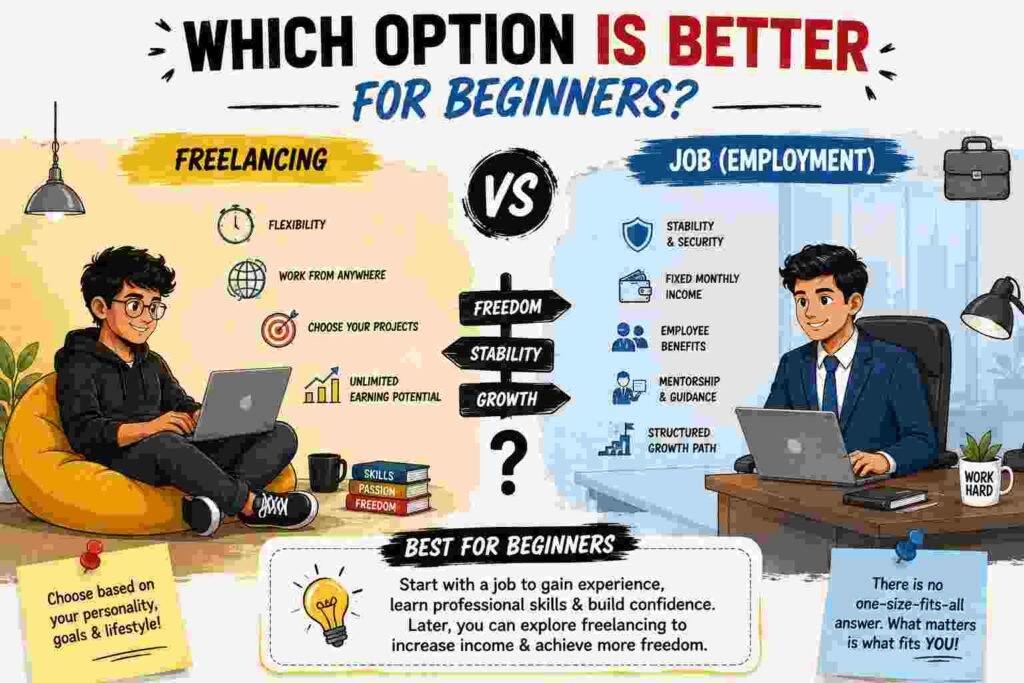
For most beginners, starting with a traditional job can be extremely beneficial.
Benefits include:
- Stable income
- Professional mentorship
- Industry exposure
- Networking opportunities
- Structured learning
However, freelancing may be ideal if you:
- Prefer independence
- Have strong self-discipline
- Enjoy entrepreneurship
- Want location freedom
- Are comfortable with risk
Many successful freelancers begin their careers in traditional jobs and later transition into full-time freelancing.
Can You Do Both?
Absolutely.
Many professionals successfully combine freelancing and traditional employment.
Examples include:
- A graphic designer working full-time while accepting freelance projects on weekends.
- A content writer building freelance clients after office hours.
- A web developer offering freelance services alongside a corporate role.
This hybrid model offers:
- Stable income
- Extra earnings
- Portfolio growth
- Reduced financial risk
For beginners, this can be one of the smartest approaches.
How Digital Mamtra Helps Aspiring Professionals
At Digital Mamtra, our goal is to help individuals build successful digital careers.
We provide insights on:
- Freelancing strategies
- Digital marketing skills
- SEO learning resources
- Career development
- Remote work opportunities
- Online business growth
Whether you choose freelancing, a traditional job, or a combination of both, continuous learning is the key to long-term success.
The digital economy rewards professionals who adapt, learn new skills, and stay ahead of industry trends.
Final Verdict: Freelancing vs Job in 2026
The answer to Freelancing vs Job ultimately depends on your personal goals, financial situation, and career ambitions.
Choose freelancing if:
- You value flexibility.
- You enjoy independence.
- You want unlimited earning potential.
- You are comfortable managing uncertainty.
Choose a job if:
- You prefer stability.
- You want structured career growth.
- You value employee benefits.
- You need predictable income.
For most beginners in 2026, a traditional job provides a strong foundation for learning, skill development, and professional growth. As experience and confidence increase, freelancing can become an excellent way to boost income and enjoy greater flexibility.
When evaluating Freelancing vs Job, there is no one-size-fits-all answer. The right choice depends on your personal goals, financial needs, risk tolerance, and preferred lifestyle.
Rather than asking whether Freelancing vs Job is universally better, focus on which path aligns with your current situation and future vision. Both career options offer unique advantages and opportunities for success.
At Digital Mamtra, we believe that the best career choice is the one that helps you achieve professional growth, financial stability, and long-term satisfaction. Whether you choose freelancing, a traditional job, or a combination of both, continuous learning and improving your digital skills will remain the key to success in 2026 and beyond.